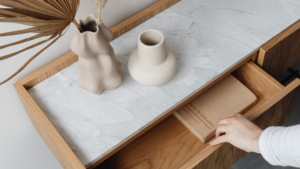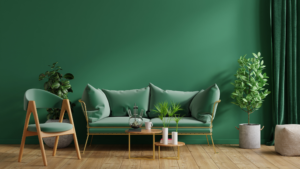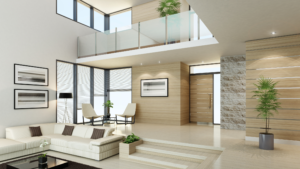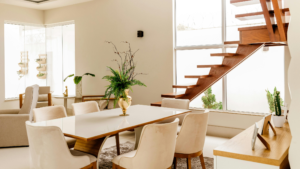
The living room is a war zone of hand-me-downs. There’s that lumpy thrift store couch taking up half the wall, a wobbly side table from your old apartment that’s now covered in remotes and takeout menus, and chairs pulled from the dining room that don’t match anything. The TV sits on a cardboard box because the media console you eyed online wouldn’t fit through the door, and there’s nowhere to put your feet without kicking the coffee table that’s too tall and scratches the floor every time you move it.
You’ve tried fixing it before. Maybe you watched a few YouTube room makeovers, measured once (sort of), and ordered a sofa that looked perfect in the photos. It arrived, but it blocked the walkway, or the color clashed with your rug, or it sagged after a month because the frame was particle board disguised as hardwood. Everything got rearranged a few times, guests sat awkwardly, and now it’s back to looking like a temporary setup while you scroll Amazon late at night wondering where to start.
The problem wasn’t laziness or bad taste. It was buying pieces without knowing your room’s actual shape, traffic flow, and how your household moves through it. A big sectional crushes small spaces, making them feel smaller. A tiny loveseat in a family room leaves everyone standing. Without measuring doorways, windows, and walk paths first, even ‘perfect’ furniture turns into regret.
This guide cuts through that. It helps you audit your space, spot your situation type, and pick the right starting pieces that fit your life—not some influencer’s wide-open loft.
Before You Buy Anything: The Living Room Audit
Grab a tape measure and walk into your living room right now. Don’t guess—measure the length and width of the walls, the distance from corners to windows or doors, and note every doorway size because nothing sucks more than furniture that won’t fit through. Sketch a quick floor plan on paper or your phone: mark outlets, the TV spot if you have one, and where the main walk paths are (like from front door to kitchen).
Next, count the people who use this room daily. Solo or couple? A compact loveseat might rule. Kids, pets, weekly guests? You need room to spread out without chaos. Test traffic by walking your normal routes—does the space feel cramped at doorways or open in the center? Check light too: sunny and big calls for lighter furniture; dim corners need pieces that don’t overwhelm.
Look at proportions: if your room is under 150 sq ft, anything over 80 inches wide will dominate. Long narrow rooms (like 12×20) scream for L-shapes along walls, not centered behemoths. Odd angles or fireplaces? Measure clearances around them. These details dictate everything—ignore them and your ‘deal’ becomes a delivery headache.
The golden rule: Buy for your room’s bones and your daily flow, not the photo. A sofa that fits the wall length and leaves 18 inches for walkways will make every other piece snap into place.
The 3 Living Room Types: Which Is Yours?
Small Apartment Squeeze The room’s under 150 sq ft with tight doorways—everything feels boxed in.
What works: Compact loveseats or convertible sectionals under 70 inches that hug one wall.
Skip: Massive U-shapes—they eat the floor and block light.
Family Flow Zone Open space over 200 sq ft, multiple users, toys or guests scattering everywhere.
What works: Modular L-sectionals with storage that seat 4+ without crowding paths.
Skip: Delicate armchairs—they get climbed on and broken.
Narrow Passageway Long thin room (like 12×18), traffic heavy from entry to other areas.
What works: Slim sofas against long walls plus floating side tables.
Skip: Bulky coffee tables—they turn walkways into obstacle courses.
Start Here: The 4 Essentials
Main Seating
Why this matters: Without solid seating first, your living room isn’t functional—guests perch awkwardly, movie nights mean floor-sitting, and it stays a pass-through zone. The sofa anchors everything else, defining traffic flow and scale. Pick wrong, and tables won’t line up, lamps topple, and the room feels off-balance forever.
What to look for:
- Removable legs for doorways under 30 inches wide
- Frame labeled kiln-dried hardwood, not ‘engineered wood’
- Seat depth 22-25 inches—too shallow feels like a bench, too deep swallows small frames
- Fabric that’s pet/kid-proof like linen or chenille, not velvet that shows every stain
Reality check: Most cheap couches use foam that flattens in 6 months—test by sitting hard; if it bottoms out, walk away. Modular beats fixed because you can reconfigure as life changes.
This is the one I swear by for small spaces: the SUNLEI Convertible L-Shaped Sectional Couches. It’s space-saving genius that flips configurations without tools, perfect if your doorways are narrow or you rearrange often. The linen fabric hides kid messes better than leather, and the chaise stores blankets so floors stay clear.
For bigger family setups, grab the 97.5″ L Shaped Couch Set with Storage Ottoman—it’s an Amazon’s Choice with solid storage that keeps toys from migrating everywhere. Pick the SUNLEI if under 150 sq ft; go bigger for flow zones.
Coffee or Center Table
Why this matters: No table means drinks on the floor (spills), remotes lost in cushions, feet dangling awkwardly. It bridges seating, prevents stubbed toes, and ties the layout—without it, furniture floats randomly.
What to look for:
- Height matching sofa seat (18-20 inches)
- Storage shelves or lift-top for remotes/knickknacks
- Round or oval for kid-proof corners in traffic areas
- Under 48 inches long for small rooms, 50+ for family
Reality check: Glass or sharp edges disaster with kids/pets—solid wood or upholstered only. Avoid nesting sets unless you love dusting crevices.
Side Tables
Why this matters: Lamps die on the floor, drinks teeter on arms, phones slide off—side tables fix asymmetry and light gaps. They balance the sofa visually and practically, ending the ‘where do I put this’ scramble.
What to look for:
- C-shaped that slides under sofa for tight spots
- Charging ports if you couch-work
- Matching height to sofa arms (24-26 inches)
- Drawer or shelf to hide cords
Reality check: Tiny nest tables tip easily—get sturdy singles over flimsy stacks. One per seat minimum.
Get this C Table End Table for squeezes—it tucks right under, swivels for TV snacks, and fits apartments where every inch counts.
Storage Ottoman
Why this matters: Blankets, games, remotes pile up fast—ottomans hide chaos while doubling as footrests or extra seats. They solve ‘no place for stuff’ without wall units that close in small rooms.
What to look for:
- Slow-close hinge so kids’ fingers stay safe
- 300lb capacity for seating
- Removable lid for deep clean
- Matches sofa fabric for cohesion
Reality check: Cheap ones collapse inside—test weight rating. Skip if you hate upholstered dust magnets.
The 48″ Ottoman with Storage holds 330lbs and flips to a bench—ideal after your sofa’s in place.
Nice-to-Have Upgrades
Hobestluk Sofa Couch for Small Spaces—worth it as accent in narrow passageways for extra perch without bulk. Skip if seating’s already maxed.
JIASTING Mid Century Loveseat and Accent Chairs Set—grab for family zones needing chairs that don’t tip. Skip squeezes; too wide.
Modular pillows from your main sofa picks—add when colors settle. Worth it for lounging; skip if budget tight post-essentials.
Don’t Waste Money On These
Trendy glass coffee tables—fingerprint hell, shatters with kids, shows every dust mote.
Particle board TV stands—no storage depth, warps in humidity, sags under TV weight.
Overstuffed recliner sets—eats half your room, hard to move, mechanisms jam after a year.
Matchy-matchy sectionals—looks staged, can’t reconfigure, resale zero when styles change.
Nesting side tables—collect junk in cracks, unstable tops tip drinks constantly.
Velvet or suede fabrics—stains permanent, pets claw holes, cleans with dry cloth only.
The Living Room Process
1. Audit space—measure walls, doors, paths. Why first: Prevents returns; everything scales to this.
2. Clear the room—move out old stuff to garage. See bare bones; spot traffic ghosts you ignore daily.
3. Tape layout—use painter’s tape for furniture outlines. Walk it: awkward? Adjust before buying.
4. Buy main seating—get sofa/loveseat delivered first. Anchors scale; tables fit around it.
5. Position sofa—hug longest wall, 18in from paths. Test sit; tweaks now beat later regrets.
6. Add coffee table—center in front, height-match. Clears floor clutter immediately.
7. Place side tables—lamp-height next to each end. Balances visually, ends arm clutter.
8. Ottoman last—tuck in gaps. Fills dead space, stores overflow.
9. Live one week—adjust based on real use. Reveals tweaks like ‘table too high’.
10. Accessorize slow—rugs, art after function locks in.
Keeping It Maintained
Sunday Footprint Check—walk the room blindfolded (safely); stubbed toes mean layout fail. Fix weekly before it bugs you.
One-In-One-Out—new blanket? Ditch old. Prevents pillow explosion.
FIFO Rotate—front cushions to back monthly; evens wear, spots sags early.
Monthly Vacuum Frame—lift cushions, suck dust bunnies. Stops fabric breakdown.
Habit beats product every time. A $300 sofa with weekly care outlasts a $1000 neglected one.
What’s Next?
Living room functional? Hit living room organization storage ideas for baskets that hide remotes without mess. Then tackle media setup or cozy living room on a budget. One zone at a time keeps momentum without overwhelm.
Hey Homie,
Your living room works when seating fits the flow, tables clear the chaos, and nothing blocks paths— not when it matches a mood board. Start with sofa that hugs your walls, add surfaces that catch the daily dump, and skip shiny trends that break first kid crash. Measure twice, buy for yesterday’s fails, live in it a week before ‘perfecting.’ You’ve dodged the big mistakes—now make it yours.