Your small bedroom looks like a disaster zone. Clothes piled on the chair you swore you’d use for seating. Under-bed space crammed with random boxes. That one corner where you’ve stacked everything that doesn’t have a home. And somehow, despite buying organizers and watching YouTube videos about minimalism, nothing has actually stuck.
Here’s what’s frustrating: you’ve reorganized before. You bought containers, maybe some floating shelves, got everything looking neat for about two weeks. Then life happened—new season, new purchases, life changes—and suddenly you’re back to chaos. The room feels smaller, more cramped, and you’re wondering if you’re just bad at organization.
The problem wasn’t your effort. The problem was that you were buying storage solutions designed for someone else’s life, not yours. Generic advice about “maximizing vertical space” doesn’t account for your actual ceiling height, your apartment’s quirks, or the fact that you actually need your bedroom to function as a bedroom—not a showroom.
This guide is different. Instead of telling you to buy things first, we’re going to help you figure out what your specific situation actually needs. Then we’ll walk through the exact products and systems that solve real problems—not Pinterest problems.
Before You Buy Anything: The Small Bedroom Audit
Stop. Before you click on a single product link, you need to understand your space. Most people fail at small bedroom organization because they organize for an imaginary room instead of the one they actually live in.
Get into your bedroom right now and do this audit:
Measure your walls and identify the usable space. How tall are your ceilings? Which walls are actually available for storage—accounting for the bed, windows, doors, and outlets? Small bedrooms have limited real estate, and wasting it on the wrong solution sets you up to fail. If your bedroom is 10×12 feet with a queen bed, you don’t have the same options as someone with a 12×14 space.
Look at what you actually own. Not what you think you should own—what’s actually in your room right now. Clothes, shoes, books, hobby supplies, seasonal items? The type of stuff you store determines what storage solution works. If you have 40 pairs of shoes, drawer organizers won’t cut it. If you have mostly soft items like sweaters and blankets, stackable bins work differently than if you’re storing hard items.
Identify your access patterns. What do you reach for daily versus seasonally? If you need winter coats every morning, they shouldn’t be in a hard-to-reach under-bed container. If you wear the same 10 outfits on rotation, they should be at eye level and easy to grab. Storage that requires you to move three other things to get what you need will fail within a week.
Check your walls for load capacity. Not all walls are created equal. Hollow-core doors can’t handle heavy shelving. Drywall without studs will fail. If you’re renting, you might be limited to adhesive solutions. This matters because buying beautiful floating shelves for a wall that can’t support them is wasted money and a hole in your wall.
The golden rule: Organize for what you actually have and how you actually live, not for what a bedroom should look like. Your small bedroom storage system is only useful if it works for your habits. If you’re someone who throws clothes on a chair, fighting that habit with a perfect closet system will fail. Instead, add a stylish hamper or a clothing rack that makes that habit work for you.
The 3 Small Bedroom Types: Which Is Yours?
The Bedroom with No Closet — The problem: You have nowhere official to hang or store clothes, so everything ends up on the bed or floor. What works: A combination of vertical solutions—wall-mounted hanging systems, tall dressers, and freestanding wardrobes that create a “closet” where none exists. Skip: Small decorative shelves that look cute but can’t hold a real wardrobe. You need capacity, not aesthetics.
The Bedroom with One Small Closet — The problem: Closet space exists but it’s minimal—maybe a single rod and two shelves. Overflow happens immediately. What works: Maximize that closet with double-hanging rods and shelf dividers, then use under-bed storage and a dresser for the rest. Skip: Buying a second dresser in the main room. That eats floor space you don’t have. Use vertical wall space instead.
The Bedroom Where the Bed Takes Up Half the Room — The problem: A queen or full bed leaves almost no floor space, so storage has to happen on walls, under the bed, or in multifunctional furniture. What works: Tall dressers, wall-mounted shelving, under-bed containers, and a storage bench at the foot of the bed. Skip: Low-profile furniture. It wastes vertical space. Go tall instead.
Start Here: The 4 Essentials
Vertical Dresser or Storage Tower
Why this matters: A dresser is your foundation. It holds everyday items at a reasonable height, keeps things organized in drawers so you can actually find what you need, and doesn’t eat floor space if you choose a tall model instead of a wide one. Most people put a short, wide dresser in a small room and then wonder why they have no floor space.
What to look for: At least 4 drawers (more storage capacity), a footprint no wider than 30 inches, and height of at least 40 inches. Fabric drawers are fine—they’re lighter and quieter than wood. Look for sturdy metal frames because small bedrooms get heavy use and flimsy furniture breaks fast.
Reality check: Don’t buy a dresser that’s too pretty to actually use. If you’re someone who throws clothes on a chair, a dresser with small, fiddly compartments will frustrate you. You need big, easy-to-access drawers that can handle real life.
The OLIXIS Dresser with 7 Storage Drawers is an Amazon Choice product that solves this perfectly. It’s tall enough to draw the eye upward, narrow enough to fit in tight spaces, and the drawers are deep enough to actually hold a full outfit. The white finish makes the room feel bigger instead of cramped.
If you need something even more compact, the ODK Dresser with 4 Storage Drawers is smaller but still functional. Choose based on how much you actually need to store—more drawers means more capacity but also a larger footprint.
Under-Bed Storage Containers
Why this matters: The space under your bed is real estate you’re already paying for but probably wasting. Under-bed containers let you store off-season items, extra blankets, or shoes without taking up wall or floor space. This is where seasonal storage lives so your daily-use items stay accessible.
What to look for: Containers with wheels (so you can actually pull them out without destroying your back), clear sides so you can see what’s inside without opening them, and lids that seal to keep dust and bugs out. Size matters—measure under your bed first. Most beds have 12-18 inches of clearance, so get containers that fit that height.
Reality check: Shallow containers under the bed look nice but they’re useless. You can barely fit anything in them. Get containers that are actually deep enough to justify the space. Also, if your bed is low to the ground, standard under-bed containers won’t fit. Measure before you buy.
The Budding Joy 90L Under Bed Storage Containers are the right choice here. They’re large enough to hold serious volume, they have clear tops so you know what’s inside, and the handles make them actually usable. Get at least two so you can store both seasonal clothing and extra bedding.
For a budget option, the SpaceWhisper 90L Under Bed Storage gives you the same capacity at a lower price point. Both work equally well—choose based on your budget.
Wall-Mounted Organizers or Shelving
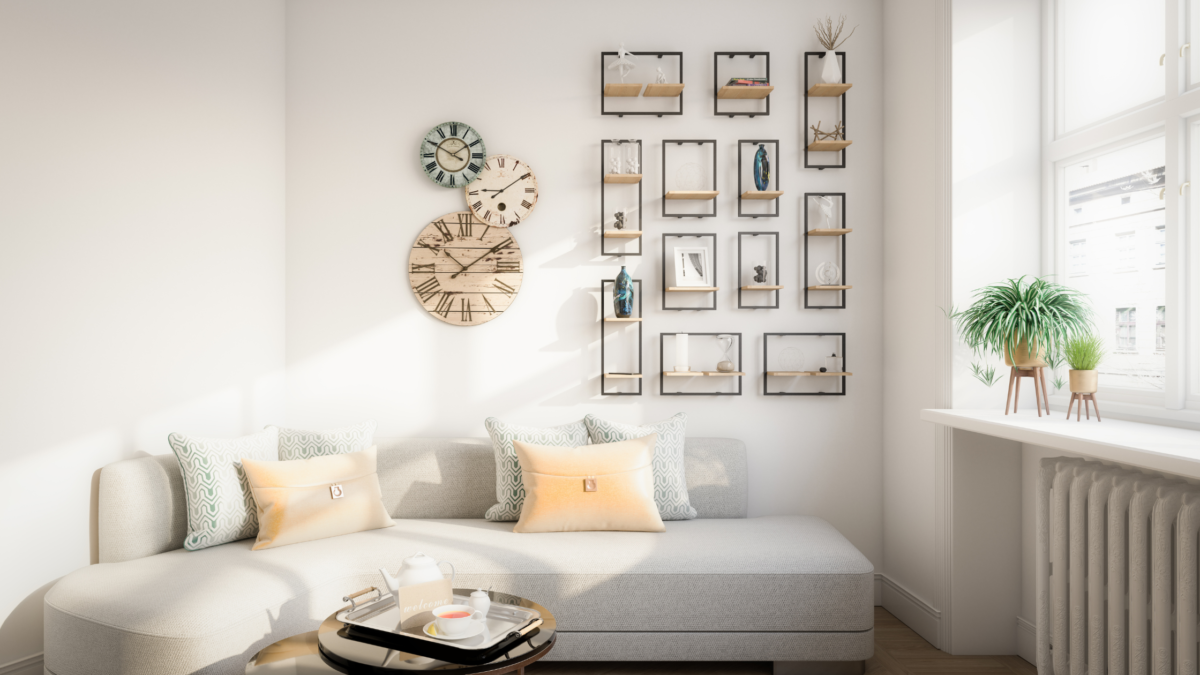
Why this matters: Walls are free real estate in a small bedroom, and they’re where you should be storing things instead of on the floor. Wall-mounted solutions draw the eye upward, making the room feel taller and less cramped. They also keep items accessible without eating floor space.
What to look for: Sturdy mounting hardware that can handle your wall type (drywall anchors for drywall, studs for heavy loads). Shelves should be at least 8 inches deep so items don’t fall off. Consider what you’re storing—books need deeper shelves than decorative items. Over-the-door organizers are also wall storage and require zero installation.
Reality check: Not all walls are strong enough for heavy shelving. If you’re renting or your walls are hollow-core, you’re limited to adhesive solutions or over-the-door organizers. Don’t fight it—work with what you have. Over-the-door organizers are genuinely useful for small bedrooms because they use dead space.
The HOMELUX THEORY 6 Tiers Over The Door Organizer is the best choice for renters or people with weak walls. It holds a serious amount of stuff—shoes, accessories, small items—without any installation. The thick fabric means it actually lasts, not like cheap organizers that rip after a month.
If your walls can handle it, a tall narrow bookshelf like the SUNMORY 6 Tier Tree Bookshelf gives you vertical storage that looks intentional instead of cluttered. It works for books, baskets, or a mix of both.
Multifunctional Furniture
Why this matters: In a small bedroom, every piece of furniture needs to earn its space by doing more than one job. A storage bench at the foot of the bed gives you seating, a visual anchor for the room, and hidden storage. A nightstand with drawers stores your bedside items instead of cluttering the surface. This is how small bedrooms actually work—nothing is just decorative.
What to look for: Furniture that serves your actual needs. If you don’t sit at the foot of your bed, a storage bench is wasted space—use that room for a tall dresser instead. If you need a nightstand, choose one with drawers, not open shelves where everything becomes visible clutter.
Reality check: Multifunctional furniture can look awkward if it’s poorly designed. You’re not trying to squeeze ten functions into one piece. You’re looking for furniture that naturally does two things well. A nightstand with drawers isn’t trying too hard—it’s just a nightstand that also stores things.
The DUMOS Nightstand with 4 Drawers is a perfect example. It looks like a normal nightstand but has serious storage capacity in those drawers. Your bedside items stay organized instead of scattered on top.
Nice-to-Have Upgrades
Space-Saving Hangers — If you have wall-mounted hanging space or a clothing rack, space-saving hangers like the DUCOO Space Saving Hangers let you fit more clothes in the same space. Worth it if you have a closet or hanging system and need to maximize capacity. Skip if your hanging space is already full—hangers aren’t the bottleneck.
Stackable Storage Bins — Clear plastic bins with lids are useful for storing off-season items in a closet or on shelves. The 4 Tier Plastic Storage Bins with Wheels are worth it if you have a closet shelf and need organized storage. Skip if you don’t have shelf space—they just become clutter on the floor.
Foldable Blanket Storage Bags — If you store multiple blankets or seasonal clothing, the Lifewit 6 Pack Clothes Storage Bins with Lids compress items and keep them clean. Worth it for seasonal storage. Skip if you only have one or two blankets—regular under-bed containers work fine.
Don’t Waste Money On These
Tiny Decorative Shelves — They look cute but hold almost nothing. In a small bedroom, every shelf needs to earn its space by actually storing things, not just displaying a single framed photo. You’ll end up frustrated when you realize you can’t fit anything useful on them.
Ornate Storage Ottomans — They seem like a good idea until you realize they take up floor space, don’t hold much, and you never actually open them because they’re too pretty. Use that floor space for a functional dresser instead.
Hanging Shoe Organizers with Tiny Pockets — The pockets are too small for real shoes and too visible for anything else. If you need shoe storage, use under-bed containers or a shoe rack instead. This just adds visual clutter.
Closet Systems with Too Many Compartments — If you’re not naturally organized, a closet system with 20 different bins and labels becomes a source of frustration. You’ll abandon it within a month. Start simple—hanging rod, one shelf, done. Add complexity only if you actually use it.
Adhesive Hooks Everywhere — Yes, they’re easy to install. But they rip drywall, they don’t hold much weight, and your small bedroom ends up looking like a hook farm. Use them for light items only—bags, hats, lightweight organizers. Not for heavy coats or bags full of stuff.
The Small Bedroom Storage Process
1. Empty the room or at least clear the bed. You need to see your actual floor and walls without furniture in the way. This is the only way to understand what space you actually have to work with.
2. Measure everything—walls, floor space, ceiling height, under-bed clearance. Write it down. Seriously. You’ll reference this when shopping and it prevents you from buying something that doesn’t fit.
3. Sort your belongings into categories: daily use, seasonal, sentimental, and donate. Small bedrooms only work if you’re ruthless about what stays. If you haven’t worn it in a year and it doesn’t make you happy, it takes up space that could be used for something you actually need.
4. Place your bed first, then your dresser. These are your anchors. Everything else builds around them. If your bed is in the wrong spot, the whole room feels wrong.
5. Install wall storage next—shelves, over-the-door organizers, or hanging systems. Do this before you fill drawers because you might need to access walls later. It’s easier to install now than to move everything later.
6. Add under-bed storage for seasonal items. This keeps daily-use items accessible while clearing floor and closet space.
7. Organize your dresser drawers by category—underwear, socks, t-shirts, etc. Use drawer dividers if you need them, but honestly, most people do fine without them. The key is not overstuffing so you can actually find things.
8. Fill your closet with daily-wear items only. Everything else lives in the dresser, under the bed, or on shelves. Your closet is for things you wear regularly, not for storage overflow.
9. Put a small hamper or basket in the corner for dirty clothes. This prevents the chair-pile problem. Everything has a designated home.
10. Step back and assess. Do you have floor space? Can you move around? Is everything you use daily accessible? If not, adjust. This is your system—it should work for you, not against you.
Keeping It Organized
The Weekly Reset — Every Sunday (or whatever day works for you), spend 15 minutes putting things back where they belong. Clothes back in the dresser, items off the floor, under-bed containers closed. This is what keeps it from becoming chaos again. It’s not about perfection—it’s about maintenance.
The One-In-One-Out Rule — When you buy something new, something old leaves. This keeps your volume from creeping back up. Small bedrooms only work if you’re intentional about what enters the space.
Seasonal Rotation — Every three months, swap seasonal items. Winter coats go under the bed, summer clothes come forward. This keeps your daily-use space focused and prevents your dresser from being overstuffed with clothes you’re not wearing.
The Monthly Purge — Once a month, look at what’s actually in your dresser. If you haven’t worn it, it’s taking up space. Be honest about what you actually wear versus what you think you should wear.
The real truth: The system only works if you maintain it. Buying the perfect organizers and then ignoring them is the same as not buying anything. The habit matters more than the product. You can have a cheap dresser and an organized bedroom, or an expensive designer dresser and chaos. Pick the habit.
What’s Next?
Your small bedroom is now organized. The next problem area is usually the closet itself—even if you have one, it probably needs better organization systems. Check out our guide on living room organization storage ideas for similar vertical thinking you can apply to other rooms, or tackle home organization systems to create a whole-house approach. Create one working system at a time. When this becomes automatic, move on.
Hey Homie,
Small bedroom storage isn’t about buying the most products or having the prettiest setup. It’s about finding what you need, keeping things accessible, and not letting your space feel smaller and more cramped than it actually is. Buy products that solve YOUR actual problems—not the problems you see on Pinterest. Start with the basics: a good tall dresser, under-bed storage, and wall organization. See what works for your habits. Add more only if you need it. The goal isn’t a magazine-worthy bedroom—it’s a bedroom where you can actually live, move around, and find your stuff. You’ve got this.