Your counters are covered in a random assortment of stuff: keys tossed next to a half-dead plant, remotes scattered like they’ve been flung from across the room, a few mismatched coasters under coffee mugs that leave rings anyway, and that one decorative tray that’s somehow collecting mail and lint. The living room shelf has books leaning against empty picture frames, the entryway table is a graveyard for sunglasses and mystery cables, and every flat surface looks like it’s auditioning for a flea market stall.
Here’s the part that hits home: you’ve tried fixing it before. Maybe you watched a few YouTube videos on minimalism, impulse-bought some sleek organizers during Prime Day, or even purged half your stuff during a weekend motivation spike. Everything got put away nice and neat… until about a month later, when it was all creeping back out, worse than before because now you had extra bins taking up space.
The issue wasn’t your effort or lack of commitment to the ‘minimalist aesthetic.’ It was grabbing trendy-looking items that didn’t match your actual daily flow – things that promised zen but couldn’t handle real life like grabbing keys on the run or where to stash that sponge without it turning into a soggy mess. Minimalism fails when products fight your habits instead of supporting them.
This guide cuts through that by focusing on what your specific setup actually demands, so you buy less, regret nothing, and end up with surfaces that stay clear without constant babysitting.
Before You Buy Anything: The Minimalist Home Audit
Grab a notebook or your phone notes app and walk through your home right now – no shopping cart open yet. Start by measuring the key trouble spots: entryway table depth and height, kitchen counter real estate next to the sink, bathroom vanity width, coffee table surface area, and any shelves 12 inches deep or more. Note what’s piling up most: keys and mail? Remotes and coasters? Soap dishes and scrubbers?
Look at your traffic patterns too – do you dump stuff when you walk in the door, or does clutter migrate from kitchen to living room by evening? Jot down the top three ‘hot zones’ where items live temporarily before disappearing into drawers. Check door types (solid or hollow-core) and cabinet depths, because many organizers crash and burn if they don’t fit these basics.
These details reveal your home’s personality: tight spaces need vertical or wall-mounted solutions, open counters call for low-profile risers, entryways demand grab-and-go holders. Ignore this, and you’ll buy bulky decor that overwhelms small apartments or flimsy trays that slide off wide counters.
The golden rule: Build for your home’s constraints and your two-minute habits, not Instagram symmetry. A single well-placed riser beats ten mismatched trays every time.
The 3 Home Types: Which Is Yours?
Counter-Cluttered Kitchen The sink area drowns in sponges, soap, and bottles with no designated spots. **What works:** Low wooden risers elevate one item at a time for easy access without crowding. **Skip:** Large multi-tier racks – they tower over sinks and collect dust on top shelves.
Entryway Chaos Drop Zone Keys, mail, and sunglasses pile on any surface near the door. **What works:** Wall-mounted hooks or slim shelves with built-in cubbies for instant drop-off. **Skip:** Freestanding trays – they tip over with daily dumping and eat floor space.
Living Room Surface Spam Coffee tables and shelves buried under remotes, coasters, and vases that migrate. **What works:** Compact caddies and absorbent coasters that stack neatly when not in use. **Skip:** Oversized decorative bowls – they invite more clutter instead of curbing it.
Start Here: The 5 Essentials
Kitchen Sink Risers
Why this matters: Without elevation, your sponge and soap slide into puddles, breeding bacteria and forcing everything into a slippery pile that topples when you reach for a scrubber. A simple riser creates breathing room underneath for drainage and keeps counters dry, which means less wiping and fewer mystery stains.
What to look for:
- Wood or acacia base for stability – plastic warps with moisture
- Footed design at least 2 inches high for airflow
- Compact footprint under 9×4 inches for small sinks
- Water-resistant finish, not raw wood that absorbs
Reality check: Most cheap risers are too short or slick on top, so your soap dish glides right off during use.
This is the one I reach for daily – the Acacia Wood Riser for Bathroom Sink Tray. It’s got sturdy feet that grip the counter without scratching, and the size is perfect for propping up a soap dish or sponge without dominating the space. For bathrooms too, it handles humidity without warping.
Grab the matching smaller version if your sink is tiny; otherwise, one riser covers soap and scrubber basics.
Remote and Key Organizers
Why this matters: Remotes and keys don’t stay put because flat surfaces tempt dumping – they scatter, get lost under mail, and turn your coffee table into a treasure hunt every evening. A dedicated holder corrals them in one glanceable spot, cutting search time and preventing that ‘where’s the TV remote?’ frustration.
What to look for:
Reality check: Fancy multi-compartment caddies overwhelm small tables and become catch-alls for junk instead of essentials.
I’ve got this Remote Control Holder in leather on my living room table – it swallows three remotes without looking bulky, and the material doesn’t slide around. Pair it with the RelaxScene Key Holder Wall Mount for entryways; its shelf catches mail too without needing table space.
Choose leather for high-traffic living rooms, wood for bathrooms or kitchens.
Coasters with Holders
Why this matters: Naked mugs etch rings into every table, and loose coasters migrate or get lost, so you skip them altogether and regret it later. A set with a holder keeps them contained and accessible, protecting surfaces without visual clutter.
What to look for:
Reality check: Thin cheap ones soak through and stain; you need thickness for real absorption.
These Coasters for Drinks Set of 8 with Holder are the ones – super absorbent so no rings ever, and the holder keeps them from scattering across drawers. Amazon’s Choice pick for a reason.
One set does coffee tables and end tables; add a second only if you host often.
Bag and Trash Organizers
Why this matters: Grocery bags and trash liners pile up under sinks or in pantries, exploding when you need one fast, turning a quick grab into a rummage fest. Wall-mounted holders dispense them one at a time, freeing cabinet space for actual storage.
What to look for:
Reality check: Freestanding versions tip over and take up prime shelf real estate you need for cans.
The SYIPO Plastic Bag Holder mounts anywhere and pulls bags smoothly – perfect for apartments with tight pantries. It’s slim enough for cabinet doors.
Single pack for starters; double up for big grocery hauls.
Surface Decor Trays and Vases
Why this matters: Empty counters feel cold, but random knick-knacks create visual noise. Intentional trays and vases anchor spaces, drawing the eye to one focal point instead of chaos.
What to look for:
Reality check: Glass shatters easy and shows dust; stick to solids.
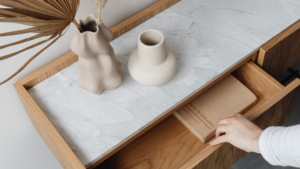
Love this Carrot’s Den Donut Vase Set of 2 – minimalist white ceramic that works on consoles or shelves without screaming for attention. For everyday use, the zoocatia Small Wood Tray Pedestal elevates a candle or plant perfectly.
Sets for multiple rooms; singles for one accent spot.
Nice-to-Have Upgrades
Airkeep Reed Diffuser Set – Worth it for small bathrooms or entryways needing subtle scent without plugs or candles. Skip if you prefer no fragrance or have pets that knock things over.
PEKER Bamboo Bathroom Organizer – Great for vanity clutter with skincare bottles once counters are clear. Skip narrow sinks where it overhangs.
OLETHA Square Tissue Box Cover – Elevates bathroom tissue from eyesore to decor on wide counters. Skip tight spaces or open shelves.
Don’t Waste Money On These
Large multi-tier spice racks – They dominate counters and topple when bumped, sending jars flying.
Decorative wire baskets – Rust in humid bathrooms and hide contents so you forget what’s inside.
Overhead pot racks – Grease drips down, and in low-ceiling rentals, they’re a head-banging hazard.
Fancy glass canisters – Show fingerprints instantly and shatter if you overload them.
Collapsible silicone bins – Collapse under weight and stain from oils, back to loose bags in a week.
LED strip lights under cabinets – Burn out fast and create glare that washes out your minimalist vibe.
The Minimalist Home Process
1. Empty all surfaces – Pull everything off counters, tables, and shelves to see raw space. This reveals forgotten items and exact measurements without bias.
2. Sort ruthlessly into keep/use/toss – Touch each item: if you used it yesterday or will tomorrow, keep. Ditch duplicates; you’re aiming for one perfect spot per function.
3. Audit hot zones per the earlier checklist – Measure and note traffic now that it’s bare. This dictates riser heights or holder placements.
4. Install fixed organizers first – Mount bag holders and hooks before adding trays; they create the skeleton everything else lives on.
5. Place risers and caddies – Elevate sinks and corral remotes/keys based on daily paths. Test by simulating a morning rush.
6. Add coasters and bags – Stack near use spots; load dispensers now so they’re ready.
7. Anchor with decor – One vase or tray per surface max; step back – does it breathe or crowd?
8. Walk the full circuit – Enter, grab keys, kitchen grab, living room settle. Tweak anything that snags flow.
9. Return extras immediately – That second set? Box it if unused after a week.
Keeping It Maintained
Sunday Reset: 10 minutes nightly touch every surface – if it’s not essential or beautiful, it goes away. Builds habit without overwhelm.
One-In-One-Out: New remote? Old one leaves. Prevents creep back to clutter.
FIFO Flow: Front-load coasters and bags weekly so you use oldest first, no waste pileups.
Monthly Purge: Empty organizers completely – spot forgotten junk hiding in corners.
The reminder: Products set you up, but daily one-touch habits keep it minimalist. Skip the reset, and even perfect picks fail.
What’s Next?
Surfaces sorted? Hit the next chaos zones like living room organization ideas or small kitchen tweaks. Pick one area, apply the audit, repeat. Systems stack when you go sequential.
Hey Homie,
Minimalist homes aren’t about empty spaces or $200 vases – they’re about surfaces that serve your real routines, with grab spots for keys and dry counters for sanity. You failed before because products didn’t fit your flow; now they do because you started with the audit. Grab one riser and one holder from Amazon today, install them, see the difference. Build from there – your home will feel lighter without feeling empty.