Your living room looks like you just moved in—or like you’ve been meaning to do something about it for months. Maybe there’s a hand-me-down couch that’s seen better days, mismatched furniture that doesn’t talk to each other, and the whole space feels temporary. Like you’re still waiting for your real life to start before you actually decorate.
Here’s what probably happened: You scrolled Pinterest, got overwhelmed by $2,000 sectionals and designer accent pieces, and then closed the app. Or you went to a big box furniture store, looked at the prices, and decided your current setup was fine for now. Maybe you even bought a few things online—a throw pillow here, some wall art there—and it still doesn’t feel cohesive. The room still feels like a placeholder.
The real problem isn’t that you don’t have enough money. It’s that you’re trying to solve a living room problem with decorative purchases instead of structural ones. You need furniture that works, not just stuff that looks good in a photo. You need pieces that fit your actual space, your actual lifestyle, and your actual budget—and you need to know exactly what order to buy them in so you’re not wasting money on things that don’t matter yet.
This guide does something different. Instead of showing you 47 cute Amazon finds, we’re going to walk through exactly how to spend $300 to transform a living room that actually functions. We’re talking about the furniture that does the work, the strategic decor that ties it together, and honestly, what not to waste money on when your budget is this tight.
Before You Buy Anything: The Living Room Audit
Stop. Before you add anything to your cart, you need to know what you’re actually working with. This is the step that saves you money and prevents the “I bought this and it doesn’t fit” situation that happens to everyone.
Measure your space right now. Get a tape measure and write down: the length and width of your room, the height of your walls, where your windows are, where your doors open, and where your electrical outlets live. Take photos of the room from multiple angles—standing in the corner, from the doorway, from the middle. This isn’t about being precise; it’s about understanding the actual constraints you’re working with.
Next, look at what you already have. That couch that doesn’t work—can it be recovered or reupholstered for less than buying new? Is it actually broken or just tired-looking? What about side tables, shelves, or other pieces? Sometimes the fastest makeover isn’t buying new; it’s making what you have work harder. If your couch is structurally sound but visually shot, a $30 throw blanket and new pillows can buy you time while you save for a replacement.
The golden rule: Don’t buy to fill space. Buy to solve problems. Your living room doesn’t need more stuff—it needs the right stuff in the right places. A room with four intentional pieces beats a room crammed with eight random ones every single time.
The Three Living Room Types: Which Is Yours?
The Bare Bones Starter: You have almost nothing or inherited mismatched pieces that don’t work together. Your problem is that the room feels incomplete and lacks function. You need a foundational couch, at least one side table, and basic lighting. Skip decorative accent pieces for now—they won’t matter until you have functional furniture in place.
The Almost-There Space: You have a couch and maybe a TV, but the room feels flat and uninviting. Your problem is visual interest and coziness, not furniture. You need layering—throw blankets, pillows, plants, wall art, and better lighting. Skip buying another couch or major furniture piece; work with what you have and build around it.
The Mismatch Situation: You have furniture from different eras that doesn’t coordinate. Your problem is cohesion. You need to either replace the most visible piece (usually the couch) or unify everything with strategic styling. Skip trying to keep everything; commit to replacing the anchor piece and letting that set the tone for the rest.
Start Here: The Three Essentials
The Couch (If You Need One)
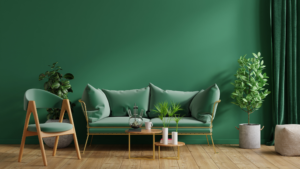
Why this matters: The couch is the anchor of your living room. It takes up the most visual space, it’s where you actually sit, and it sets the tone for everything else. If your couch is broken, uncomfortable, or visually wrong, nothing else in the room will feel right. You can have beautiful pillows and perfect lighting, but if you’re sitting on something that sags or smells weird, the room doesn’t work.
What to look for: High-density foam (not cheap cushioning that flattens in weeks), a frame that doesn’t wobble, and fabric that can handle actual living. Look for couches described as “sectional-friendly” or “modular” because they give you flexibility if your space needs change. Avoid anything with reviews mentioning assembly problems or frame issues—those are red flags that mean you’ll spend your first week frustrated instead of enjoying your new space.
Reality check: Most people buy a couch that’s too big for their room because it looks impressive in the product photo. Measure your doorways and hallways before you order. A couch that doesn’t fit through your front door is worthless, no matter how good the price.
If you need a couch and have $150-200 of your budget available, look for Amazon options in the $150-250 range. The search results mention couches under $300 that feel “incredibly luxurious,” which means you’re getting actual comfort at a budget price. Look for reviews mentioning “better than expected” or “comfortable for the price”—those are the ones that deliver. Choose a neutral color (gray, beige, or charcoal) because it works with everything you might add later and it hides wear better than light colors.
Lighting That Actually Works
Why this matters: Bad lighting makes every room feel depressing, no matter how nice your furniture is. Most living rooms rely on one overhead light, which creates harsh shadows and makes the space feel institutional. Layered lighting—overhead, task, and ambient—makes a room feel intentional and warm. It’s also the cheapest way to make a space feel more expensive than it actually is.
What to look for: At minimum, a floor lamp for reading or working, and ideally a table lamp if you have a side table. Look for bulbs that are “warm white” (2700K color temperature) not “cool white” or “daylight.” Warm light makes spaces feel cozy; cool light makes them feel clinical. Avoid anything with a complicated dimmer system—you want simple, reliable lighting that works every time.
Reality check: People buy decorative lamps that look pretty but don’t actually provide light. A $25 floor lamp from Amazon that gives you real brightness beats a $60 designer lamp that’s basically decorative. Function first, aesthetics second.
Budget $30-50 for a decent floor lamp and another $20-30 for a table lamp if you have the space. Warm-toned LED bulbs are standard now and they last forever, so don’t cheap out on the bulbs themselves.
Textiles That Tie Everything Together
Why this matters: Throw pillows, blankets, and a rug are the fastest way to make a room feel intentional instead of accidental. They add color, texture, and coziness without taking up much space or requiring assembly. They’re also the easiest things to swap out later if your style changes. A room with a good throw blanket and coordinated pillows looks like someone lives there on purpose.
What to look for: Pillows in coordinating colors (pick a color scheme—neutrals with one accent color works every time), a throw blanket in a complementary tone, and a rug that defines the seating area. Look for natural fabrics when possible (cotton, linen) because they age better and feel better than synthetics. A rug doesn’t need to be expensive; it just needs to be big enough to ground your furniture and tie the space together visually.
Reality check: People buy too many pillows and end up with a couch that looks like a pillow fort. Three to five pillows is the sweet spot. Buy a rug that’s at least 5×7 feet if your budget allows—anything smaller looks like an afterthought and doesn’t actually define the space.
Budget $40-60 for pillows and a blanket, and $60-80 for a rug. These are the items that make the biggest visual impact for the least money, so invest here before you invest in wall art or other decorative pieces.
Nice-to-Have Upgrades (After the Essentials)
Wall Art and Mirrors: These are worth it if your walls feel bare and you have $30-50 left in your budget. A large mirror makes a room feel bigger and reflects light, which actually improves how the space feels. Skip if your walls are already visually busy or if you’re renting and worried about hanging things.
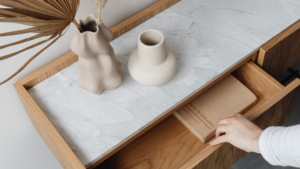
Side Tables or Nesting Tables: Worth it if you need surfaces for lamps, drinks, or remotes. Skip if you’re already tight on space or if you can use a console table behind your couch instead.
Plants (Real or High-Quality Fake): Worth it if you want to add life to the space and you have $15-25 available. Real plants add oxygen and freshness; fake plants require zero maintenance. Either works. Skip if you know you’ll kill them or forget to water them—a dead plant is worse than no plant.
Window Treatments: Worth it if your windows look bare or if you need privacy. Skip if your current curtains or blinds are functional—aesthetics can wait.
Don’t Waste Money On These
Oversized Decorative Pieces: Large wall sculptures, statement art, or decorative objects that don’t serve a function. They take up visual space and don’t add comfort or usability. Your budget is too tight for things that only look pretty.
Furniture You’re Not Sure About: If you’re on the fence about a piece, don’t buy it. You’ll end up resenting it or replacing it, which is wasting money twice. Wait until you find something you actually want.
Cheap Shelving Units: Flimsy shelves that wobble or sag make a room look unstable. If you need storage, buy one solid piece instead of three cheap ones. It’s a better investment.
Trendy Colors or Patterns: Your $300 budget is too tight to chase trends. Stick with neutrals and one accent color. You’ll still love it in two years.
Matching Furniture Sets: Those “living room in a box” deals rarely work because the pieces are usually lower quality and the proportions don’t match real rooms. Buy individual pieces that actually fit your space.
Anything Described as “Easy Assembly” That Has More Than 20 Parts: If it looks complicated in the photos, it’s complicated in real life. Your time is worth money too.
The Living Room Makeover Process
Step 1: Measure and Plan. Spend 30 minutes measuring your space and taking photos. Write down your constraints (doorway width, outlet locations, window placement). This prevents buying things that don’t fit.
Step 2: Decide on Your Anchor Piece. If you need a couch, buy that first. If you already have one, decide if it stays or goes. Everything else builds around this decision. Your anchor piece sets the color tone and style direction for everything else.
Step 3: Add Lighting. Once your main furniture is in place, add a floor lamp and table lamp if you have the space. This immediately makes the room feel more livable and intentional.
Step 4: Layer with Textiles. Add pillows, a throw blanket, and a rug. These are the fastest way to add coziness and tie colors together. This is where your room stops looking empty and starts looking like home.
Step 5: Add One Side Table or Surface. You need somewhere to set a drink or lamp. One functional side table beats three decorative ones.
Step 6: Assess and Add Strategically. Look at your room now. What’s actually missing? Wall art? A plant? Better window treatments? Only add things that solve a real problem, not things that just look nice.
Step 7: Live With It Before Adding More. Spend two weeks in your new space. Notice what you actually use, what bothers you, what you wish you had. This prevents impulse buys that don’t actually improve your life.
Keeping Your Living Room Maintained
The Weekly Reset: Spend 10 minutes on Sunday evening putting things back where they belong. Pillows get fluffed, blankets get folded, surfaces get cleared. This keeps your space feeling intentional instead of chaotic.
The Monthly Deep Clean: Vacuum under cushions, wipe down surfaces, shake out throw blankets. A living room that’s clean feels bigger and more welcoming than a living room that’s cluttered, no matter how expensive the furniture is.
The Seasonal Refresh: Every three months, step back and look at your space with fresh eyes. Does anything need replacing? Are your pillows still comfortable? Is your rug holding up? Make small adjustments before things fall apart.
The One-In-One-Out Rule: When you want to add something new to your living room, remove something old. This keeps the space from becoming cluttered and forces you to be intentional about what you bring in.
The real maintenance isn’t about products—it’s about habits. A room that’s regularly tidied and cared for looks better than a room full of expensive things that are neglected. Your effort matters more than your budget.
What’s Next?
Your living room is now functional and intentional. The next logical step is to extend that same thinking to your other spaces. If your living room is working, tackle your bedroom or kitchen next. Learn about living room organization and storage ideas to maximize what you’ve already created. Or move on to kitchen essentials for new homeowners and bring the same strategic thinking to another room. Build one working system at a time. When this becomes automatic, move on.
Hey Homie,
A $300 living room makeover isn’t about getting everything perfect. It’s about creating a space where you actually want to spend time, where things work the way they’re supposed to, and where you feel like you’re living your real life instead of waiting for it to start. Buy the furniture that functions, add the textiles that make it cozy, and skip everything else. Your living room doesn’t need to be magazine-worthy—it needs to be livable. Start with the essentials, see what actually matters to you, and add more if you need it. You’ve got this.